Saturday, 27 July 2013

Inquiring About Inquiry:
My Journey Into Inquiry Based Learning (Part 2)


This post focuses on connecting my thinking of inquiry with research.  To see my journey into inquiry, go here in Part 1 of Inquiring about Inquiry.

I joined a book club in the middle of the school year with some teachers in our school board. We read, A Place for Wonder by Georgia Heard and Jennifer McDonough. This book describes how to create a sense of wonder in the classroom by creating specific areas in your room to allow students to wonder and question. It explains how to focus into students’ natural curiosity by having them create questions. This eventually leads to the creation of a non-fiction piece of written work. This book gave concrete examples of primary inquiry and focused on the curiosity of the child. The Ontario Science and Technology curriculum quotes Jeffrey Bloom (on page 28) about the sense of wonder in our classrooms as children are naturally curious.


"Trying to understand how the world works is what children do naturally, and it is what you need to take advantage of when teaching science [and technology]. Just remember: Avoid being the knowledge authority. ... Instead, cultivate a sense of excitement for exploring and inquiring about our world and for generating and testing possible explanations."
Jeffrey W. Bloom, Creating a Classroom Community of Young Scientists, 2nd ed. (2006), p. 4

Engaging Readers and Writers with Inquiry by Jeffery D. Wilhelm makes some great literacy connections in the book. He explains inquiry very well and provides examples and details of inquiry geared more towards junior/intermediate students. A great quote connecting literacy to inquiry: “Most recent research in cognition shows that reading and writing are forms of inquiry, and are best learned in contexts of inquiry and through the questioning and discourse that is central to it”  (p. 10).

Lorraine Chiarotto’s Natural Curiosity focuses on a child’s understanding of the world through environmental Inquiry. This is a very practical book with great examples classroom inquiry. It discuses assessment of inquiry in detail and quotes the Ontario curriculum and Growing Success. As these are documents I need to use to help plan and asses my students, I know that this can be a great resource as I work through inquiry throughout the year. Chiarotto provides classroom a variety of examples of inquiry. Two of these examples specifically focus on grade one students:
  • “The Grade 1s Explore Seasonal Changes” (P.58)
  • “Grade 1/2: Susanna’s Story: What is a Living Thing?” (P.134-139)

In one of the Capacity Building Series monographs, Special Edition #24, “Getting Started with Student Inquiry” (October 2011) discusses inquiry and student engagement in an easy to follow and read monograph. A great quote to remember, “While engaged students may appreciate extrinsic rewards such as good grades, or praise, their motivation is not dependent on these things. They are engaged in learning because they find it interesting, enjoyable and self-fulling.”

Kuklthau, Maniotes & Caspari (2007) defines inquiry as:

“Inquiry is an approach to learning whereby students find and use a variety of sources of information and ideas to increase their understanding of a problem, topic or issue of importance. It requires more than simply answering questions or getting a right answer. It espouses investigation, exploration, search, quest, research, pursuit and study. It is enhanced by involvement with a community of learners, each learning from the other in social interaction.”

As I read and reflect upon the last year of inquiry, I’ve come to the conclusion that I may have created inquiry to be more of a project, than a journey of learning for my students. I focused my energy on the questioning part and had the students create lots of questions, but sometimes it didn’t go further than that. We probably created more wonders than we actually answered. I had my students doing “hands on” activities and had them creating something. I tried to let my students guide the learning, but only when it was convenient for my teaching. We definitely had moments of great inquiry and great learning. We also had times where it may have been more “busy work” than anything else. It was all engaging and fun, but purposeful?  

“Inquiry-based teaching is collaborative, investigative, and deeply intellectual. The teacher has a responsibility to make the inquiry experience purposeful and high thoughtful. Teaches are the primary architects of the learning experience.”
- Wolk, “School as Inquiry”

Wolk has helped me tweak my thinking. I now know that I need to focus on the big ideas and the big questions and go from there. In the article, he quotes “without the big ideas, an inquiry becomes little more than a friendly version of reading a textbook or a “fun activity.” With big ideas, a teacher can challenge students to think far beyond the sanitized context of a textbook” (p. 119). I need to allow my students to learn from each other and work through ideas together. I need to allow my classroom to get “messy” and the learning to get complicated. I need to be okay to not always have the answer; however, I need to always remember that I need to have a plan in mind. I need to really KNOW the curriculum and know my students. I need to be planned and purposeful in my assessment. On Page 22 of Natural Curiosity, Chiarotto writes:

“In an inquiry-based classroom, the teacher assesses student progress on a continuous basis throughout the school year, collecting and using a wide range of information to provide an informed and comprehensive picture of the student’s learning.”

Through all of the research I’ve studied, I can very clearly see that inquiry needs to be a part of my classroom. Inquiry needs to be focused, assessed and worked on together as a team. I’m planning to incorporate Science and Social Studies into my Language program as well as through an exploration time at the end of the day. 

I would love to hear your thoughts about inquiry. How have you used in in your classroom? What are your thoughts on inquiry as we start into a new school year?

Friday, 26 July 2013

Inquiring About Inquiry:
 My Journey Into Inquiry Based Learning (Part 1)


“Children have a strong disposition to explore and discover. Inquiry- based learning builds on natural curiosity, enabling children to interact, question, connect, problem-solve, communicate, reflect, and more. This kind of authentic learning extends beyond the classroom to the students’ home and community. It essentially makes learning the ‘stuff of real life’ and children active participants in and shapers of their worlds."  - Michelle Kreller-Janke & Patti Hobler (Learning As We Go)
I’ve noticed that inquiry has become a very popular topic lately. Even the new Social Studies curriculum in Ontario has been designed and focused to implement inquiry. All around us, inquiry has become the new buzz word. Many people have been wondering about it, talking about it and trying to participate in it. I, myself have jumped on that ‘band wagon’ and started my own journey about this new thing called, inquiry.

BUT - inquiry is not a new concept.

Harvey and Daniels in Comprehension and Collaboration: Inquiry Circles in Action trace inquiry to start in the 1590’s in Paris and Rome as people were designing buildings and monuments. John Dewey, “believed that students would learn more about themselves, the world and about valuable subject matter by working collaboratively with others” (p. 59). In 1918, Dewey’s protege, James Kilpatrick wrote an essay entitled, “The Project-Method: Child-Centeredness in Progressive Education” that focused on students working in groups to complete projects in social situations. Inquiry is NOT new; however, it has become a new buzz word around education in the past few years.

Play-based learning in kindergarten sparked the beginning of the inquiry journey for me. Last summer, as I began to think of myself as a grade one teacher again, I realized that I was going into a school where my students would have had two years of all day, play-based learning. How would that look in my grade one class? Could the students easily transition into desks? Would I need to put more play in the classroom? Would they be able to do the work? How could I make an easy transition from play-based learning to “real grade one” work? Last summer I had many questions. I talked to consultant in our board in the summer and tried to get my brain wrapped around the idea of incorporating some play into the class and allowing my students to guide some of the learning. Early in the year, she came into my class as were were starting to look into spiders. We had just started reading some books and they students began to take interest in spider research. Since it was the beginning of grade one, I read aloud books with information about specific topics, and they took the information they heard from the books and tried to show their learning in a way that made sense to them. I had students create posters, skits, procedures. They were engaged, they were learning, they were beginning to join in on my inquiry journey. The problem was, I didn’t know where to go from there. It wasn’t planned and purposeful, I got stuck. I knew I needed to try again.

Later on in the school year, our school board opened a workshop for kindergarten, grade one and two teachers to work together on an inquiry project (EPCI). We were given time to discuss and create our own inquiry to try with our classes. We visited each other’s classrooms and discussed what inquiry looked like. We had begun our journey. We looked at the statement: If students are given the opportunity to represent their thinking in different ways, then they will be more engaged and ready to extend their learning. My focus was through Science. My students investigated different materials and came up with different questions. From our questions, we investigated wood and metal – the most popular materials. We wondered about these materials and found out more information. The students also created structures based on their interests. Interest level was high and most, if not all my students were engaged in learning. They enjoyed working through the project and getting to control what they focused on learning. This time, I had a plan in mind of what I wanted to create and learn and had everyone create a structure using the provided materials and record their thinking on Educreations. It was more planned and purposeful. It was hands on and engaging. But is that really inquiry?

Later on in the year I heard about a school, where they did an hour of exploration time at the end of the day and linked play with Science and Social Studies. By this time, I was a little further on in my inquiry journey, so this sparked my interest. Did they have a better understanding of inquiry? Could I learn from them? I emailed the teacher and she offered some great advice and a few examples from her class. This could be planned, purposeful and allow for inquiry at the same time. This really got me thinking - can I do something like this in my class? How can I incorporate play at the end of the day while still focusing on the expectations of the Science and Social Studies curriculum? Can I use some of the concepts from A Place for Wonder to build a classroom of inquiry? Could I combine Language and Science like the book did? 

This summer I took my Reading Specialist, I was told that I needed to become a “go to” person about a topic and to inquire about an area that I had questions about. I needed to take about three weeks to research, to find out and to look into something that interested me. Of course, INQUIRY came to mind. By now I was a little further along in my journey and ready to start reflecting what I did last year and start planning how it can look in my classroom for the new year. Also, I could finally read that Stephanie Harvey and Harvey Daniels’ book Collaboration and Comprehension: Inquiry Circles in Action that had been sitting on my desk for the past few months. 

As I finished up on those three weeks of research and inquiry, I can say that it had been a busy three weeks of reading, talking and a lot of reflecting. I know that I still have a lot to learn; however, I am a little further along in my journey than when I first started. I feel that some of the readings have really helped shape my new understanding of inquiry. I am beginning to have a better idea of how inquiry can look in my class. I am beginning to come to some understanding of how I can incorporate learning in all areas, with a focus on Language and student interests by using guided questions and big ideas.

Stay tuned for Part 2 - connecting research to my learning to gain a deeper insight into inquiry.

Sunday, 16 June 2013

Grade Ones as Teachers

This past Friday, my Grade Ones became teachers to a Kindergarten class. We have been using Educreations for a few months now and grasping a good understanding of how to use it. Compared to our Kindergarten learners, my students were "digital experts".  On Friday we taught this Kindergarten class how to create a small movie about big and small objects.


My friend, Anne, approached me with the idea a few months ago when she noticed that we were posting Educreations on our blogs. Being the amazing teacher she is, she commented on each student's post and then asked me if we would be willing to share our knowledge with her class. Of course I was in - why not have Kindergartens use such a great tool to share their thinking? Watching my 22 Grade One students show and teach Anne's Kindergarten students, was inspiring. They were taking control of their own learning and sharing it with each other. We chose something simple to start, just taking pictures of big and small objects, but having them insert their pictures and record their voices independently was so exciting to see. My Grade Ones are still learning how to use it and some students needed more help than others, but they were all willing to try and teach another student. This was a huge step for my learners this year and I was so proud of them! 


As we were in the midst of this great work, Anne approached me and suggested this is something we do at the beginning of the year and continue it throughout of the year. Of course I agreed! Think of the possibilities of having young learners teach even younger learners. The possibilities are endless. I'm already looking forward to the new school year so we can start collaborating!

Do you collaborate with another class in your school? If so, how? How do you allow your learners to become teachers in your school? I'd love to hear your thoughts.

Here are just a few of the videos they created:


Thursday, 16 May 2013

Building a Community


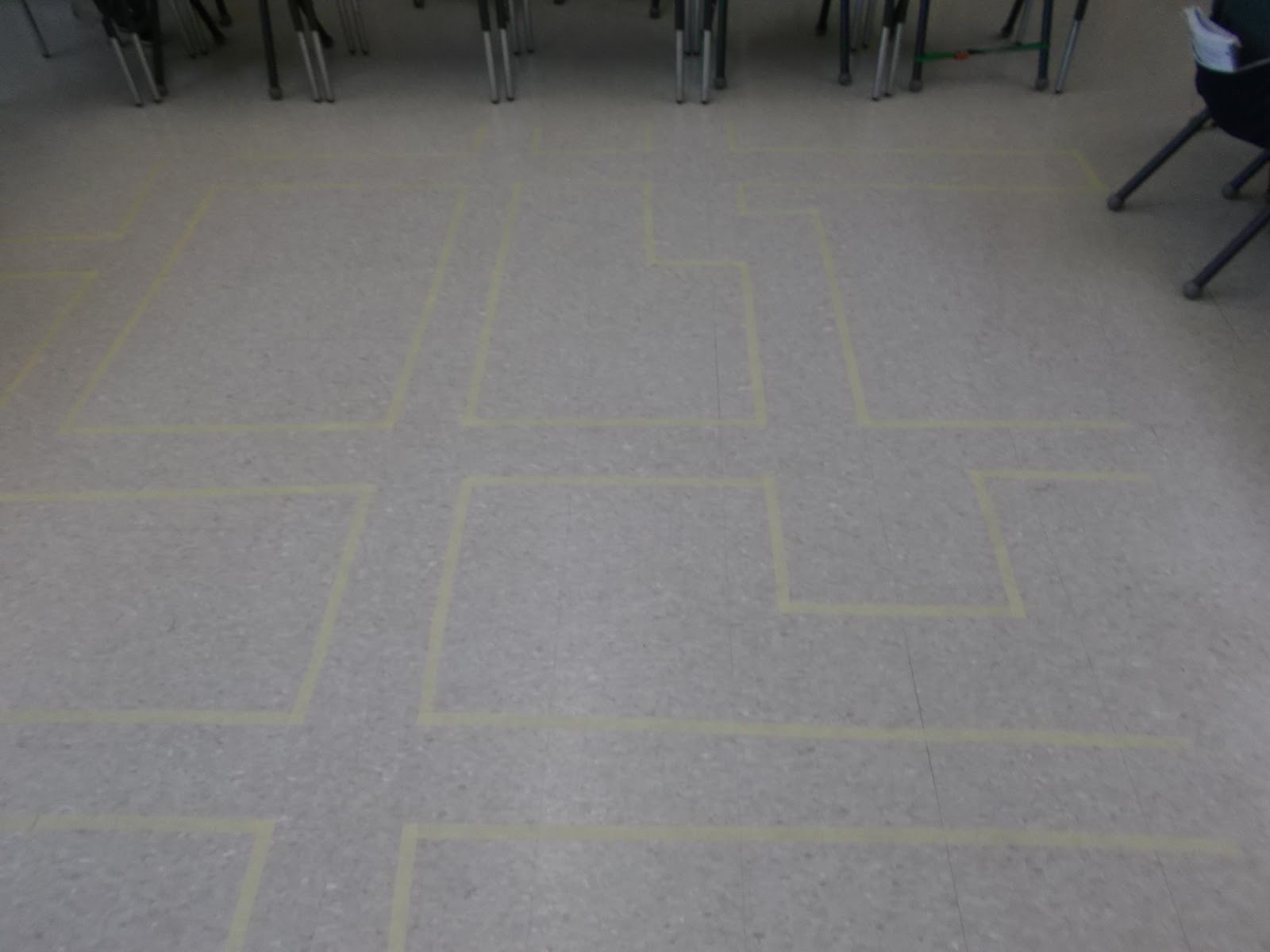
This past week we created a community on the floor in our class. We brainstormed a list of “must haves” that a community needs. Then I had students write about an important thing in our community and why we needed it.


 Later in the day, I moved all the desks to the side and created a large space in the middle.


I put tape on the floor to represent the streets and the rest was up to the students. 


They each created those important places and items in our community with construction paper. As they each completed their work, they came to the floor and placed their building or object where they thought it belonged. The students then wanted to add extras to the community: grass, parking lots, lego cars, airport, stop lights, bridges, even closed roads due to construction.


Starting to build.

Putting the pieces onto the floor and into the community.
We added North, East, South and West signs in the community to work on direction and location. Students moved through the community in a variety of directions, using appropriate language to how they moved.

The final product.
I also took pictures of specific areas in the community according to what each student was most interested in. The students then used these pictures to write in their student blogs. You can read about their community here on our student blogs.

Throughout the entire process, all of my students were completely engaged. We were able to integrate Social Studies, Language, Math and Art into this project. My students loved it and so did I. This is something I will look into doing again next year.


Wednesday, 1 May 2013

QR Codes and Padlet

Thanks to Kristen Wideen and her willingness to share what she does in her class on her blog, I attempted QR codes and Padlet (an electronic chart paper for sticky notes) with my Grade Ones today. Creating a QR code was really quite easy. Although I haven't had much experience making them before, they didn't take longer than a minute to create. I googled "QR creator", copied the url from Padlet and with a press of a button, created a QR code. This makes going to sites so much easier. A few years ago (when Padlet was Wallwisher) I remember having my Grade 6's type out the url on their computers. It was agonizing. Doing that with my Grade 1's would be really unimaginable. However; scanning a QR code today was painless.

Recently we started our study on communities. Today we used Padlet to brainstorm ideas for a KWL chart. Discussing what they KNOW about communities and what they WANT to learn.


With 11 iPads signed out and working in partners, my students typed out things they knew about communities. All my students were engaged, willing to share their ideas and enjoyed reading each others ideas as they were added in. This would not be the case if we were doing this with markers and chart paper.


I was impressed with what my students wrote and what they were interested in. They have some genuine questions and wonders about communities. I am beginning to see where we need to go next. This is a perfect opportunity to branch into some inquiry of the questions they have and learn about important people in our community and what they do.

Where my students impressed me even more, was their technology learning today. There was a lot of learning of how to use Padlet, as it was a new program for them. We couldn't figure out how to edit a post, if you accidentally clicked away or touched another part of the screen (which, if you're 6 or 7 years old, can happen a lot when handling an iPad). Huge thanks to +Padlet who answered our question quickly when I asked on Twitter. All you need to do is double click on the sticky... we tried everything but that! :) Of course, I didn't think to tweet it out until the END of the day, but together, we made it work, as I could delete or change things on my computer if needed. The key to it all, is that we kept on going without any tears (in Pete the Cat style of course!).

I love working with technology with young students as they're not often afraid to make a mistake or try something again or try something new. Technology doesn't scare them, it interests them. They are willing to try it out and play. Can we say the same with ourselves?

Sunday, 28 April 2013

Flat Stanley

This year I read "Flat Stanley"written by Jeff Brown to my Grade One class. In the past 7 years, I have done a Flat Stanley project with 2 of my other classes, but nothing like the project it became this year. Thanks to Twitter, our project went online and across North America. I asked my amazing PLN if anyone was willing to host one of our Flat Stanley's and quickly I had an amazing response. Teachers from all over Canada and United States offered to host a Stanley in their classroom. I realized this was bigger than I had imagined and created a blog for people to post pictures and information as well as the traditional way of mailing pictures or postcards to our class. For the past few weeks, my mailbox at school has been very busy with a new letter inside everyday! We have received stickers, pictures to share, books for our classroom, etc. The generosity has been amazing! Our Flat Stanley blog has also been filling up - we have over 60 different posts of where Flat Stanley has been and the adventures he's had. We've watched videos, shared pictures, read tweets and have gotten a small glimpse into a variety of different classrooms.

To my PLN - thank you for taking the time out of your busy classroom schedule to host our Stanley. My students have been absolutely thrilled with the adventures you have shared with us. We have learned so much about our province, country as well as different cities around America. Our world has grown a lot bigger, but also smaller, as we've been able to make many connections with how things are similar in your classrooms with ours. You have been very generous with your time as well as your resources to share with us. The cost of postage alone for some was shocking. Thank you for being so willing and selfless to share your adventures of a 'piece of paper' with a classroom you've never met personally. That means a great deal to me and all my students. From the bottom of my heart and 22 other students in my class, THANK YOU so much!

If you haven't had a chance to check out our Flat Stanley blog, go here to see all the fantastic adventures Flat Stanley has been up to in the past month.

Wednesday, 10 April 2013

Using Educreations... and failing at it

Sometimes the best learning happens when you fail.

Today, I messed up. I tried something new and although it seemed to be going smoothly at first, it didn't end as well. I had my students use Educreations to record their learning on 3D shapes. I split my class into groups of two and with iPads in hand, we went out into the school on a shape hunt looking for 3D figures. We took lots of pictures and they were being so creative in where these objects could be found. Once we went back to class, I thought we'd put these pictures into Educreations and create a short little movie. We have used Educreations the past few weeks sharing their made structures and explaining how they built them. (Side note: our school has recently gotten 20 iPads to share - so using iPads is still a very new thing for us!) I thought that since we've had success with this app before, it would be a great app for them to use today. My Grade Ones were importing their pictures, creating a title page and were totally focused and completely learning by labelling and discussing their 3D figures. They were just about to get to the audio part when we realized the bell was about the ring and it was time for home!

OH NO!

1 group finished and were able to save.

Another group began their audio, but was interrupted by some noisy kids in hall getting ready for home. Turns out, you can't re-record...

The rest of the groups were not quite done and needed some more time another day, but it turns out, you can't save a draft...

These iPads are not ours - they are the schools. Other classes use them and have them signed out for the next few days. Educreations may be used by other classes, so I had to save what they did have done, even though it was not complete. It was a sad moment for me to realize their hard work of a final product was not possible from today's work.

It's not always about the product, it's about the process. I've been saying this to myself lately as our class is working through inquiry. I needed to remind myself of this as the realization of my mistake.  Did my students find, discuss, compare and label 3D figures? ABSOLUTELY. It was hands on, engaging and purposeful. Some of my students didn't even realize they were doing MATH! The process was a success. The product? Not so much.

I am so proud of my Grade Ones and the things they are capable of - even if I can't share their learning with the world. At least this time.  I've been told from a great twitter friend (@ ) that 30hands app is great for this. You can re-record audio and save draft files. When it's finished, it saves in your photo roll so easy to embed too!

Lesson learned: Educreations, although a wonderful app for sharing our learning, taking pictures and recording audio is not always the BEST app to use when you need more time to complete and may need to re-record.

Sometimes the best learning happens when you fail.